OBSIDIAN HOUSE I Interior concept, 2023
Part of “FUSION ESSENCE” project by Zrobim Architects
Total area: 348,6 м2
Project team: Pavel Leshkovich, Maksim Chepul
Total area: 348,6 м2
Project team: Pavel Leshkovich, Maksim Chepul
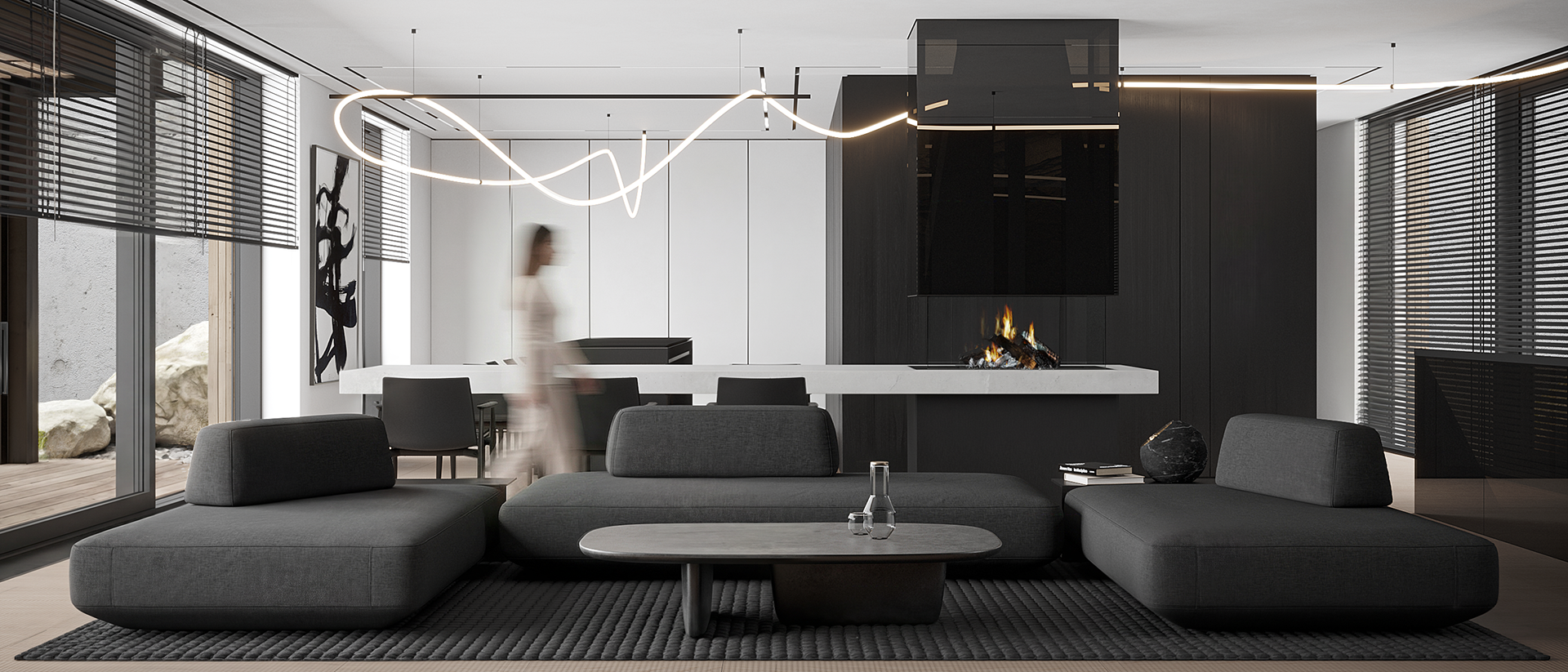
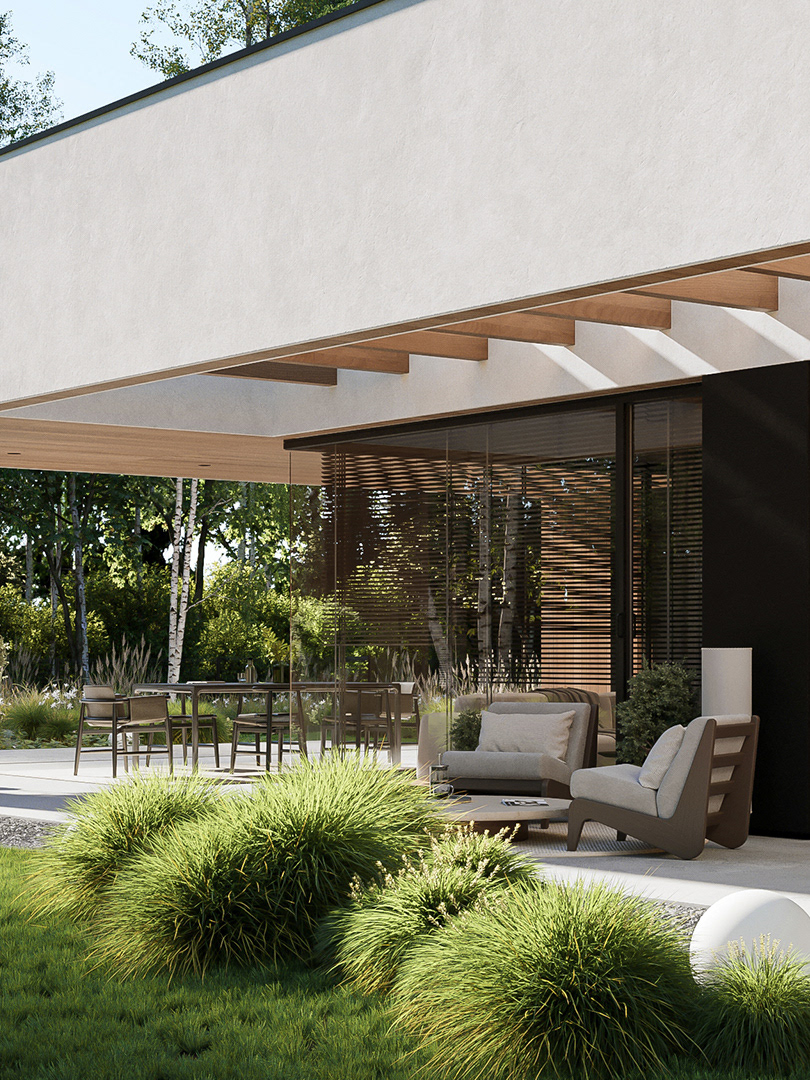
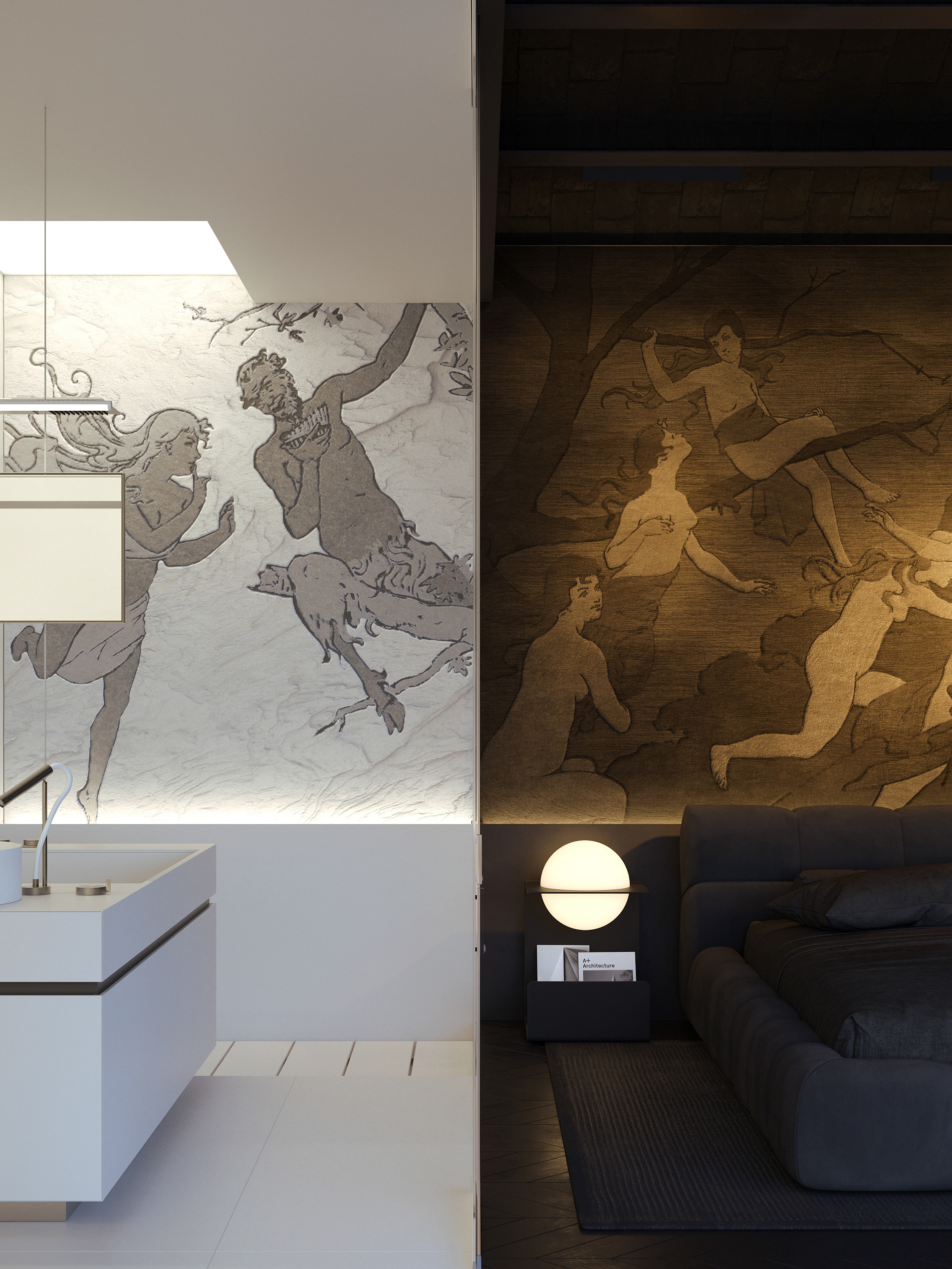
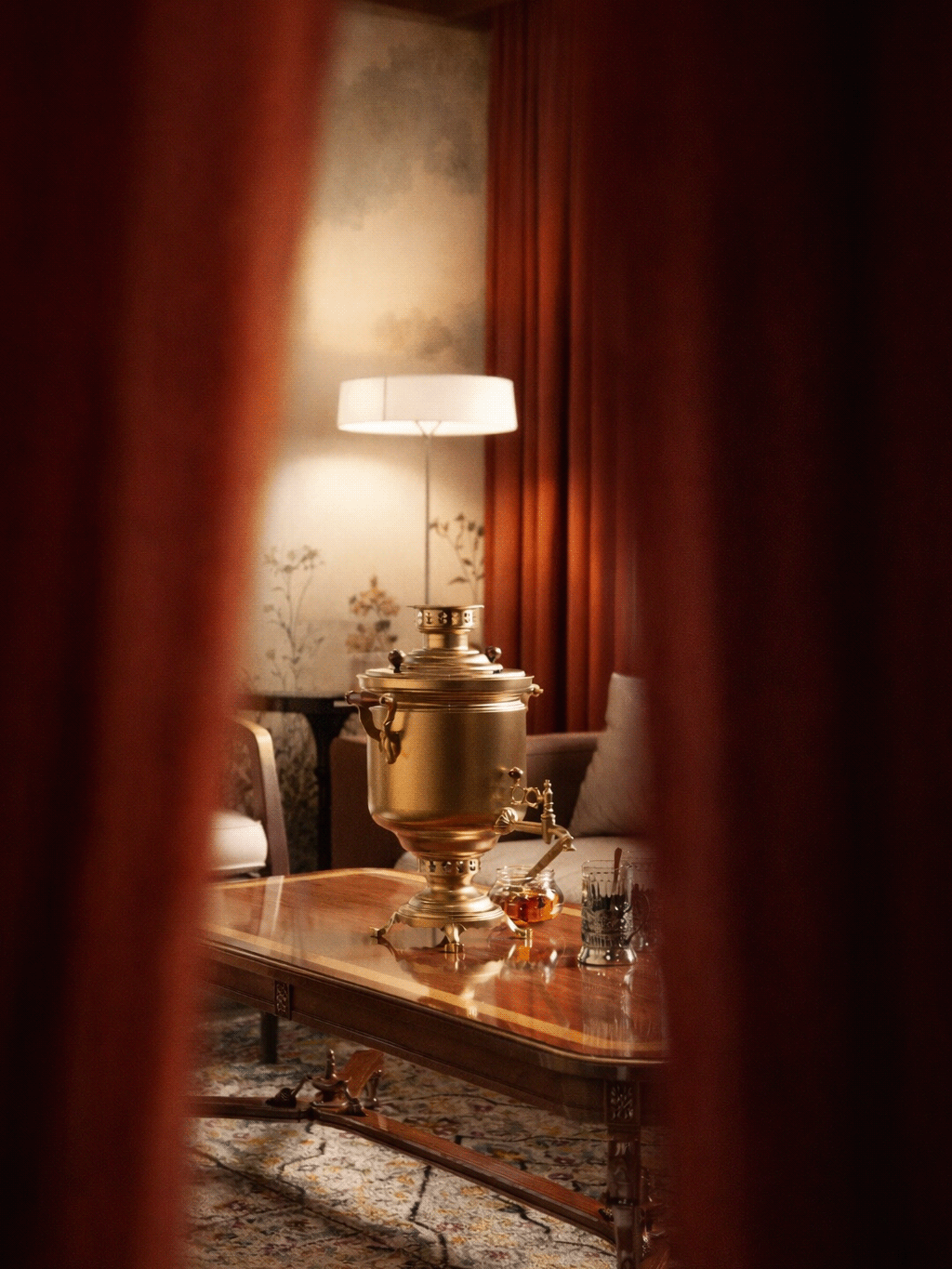
This project is a conceptual exploration of contrast — a deliberate tension between black and white, sharp geometry and organic ideas. Natural archetypes are reinterpreted through architecture, creating a dialogue between rigidity and flow, control and instinct.
The interior functions as a provocative spatial composition rather than a conventional living environment, where design approaches the territory of art. Balance is achieved not through comfort, but through opposition, intensity, and emotional impact.
|
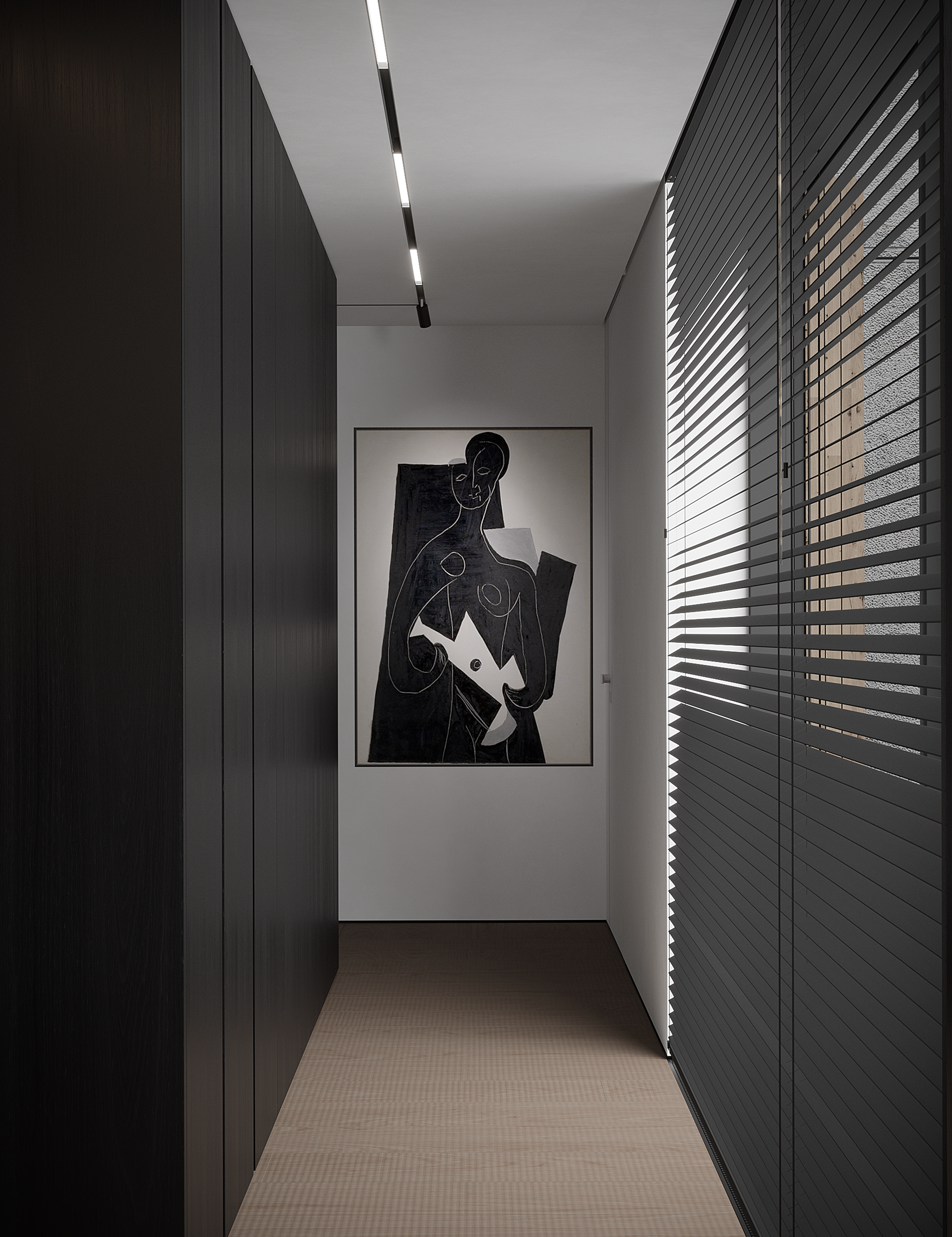
LIVING SPACE
|
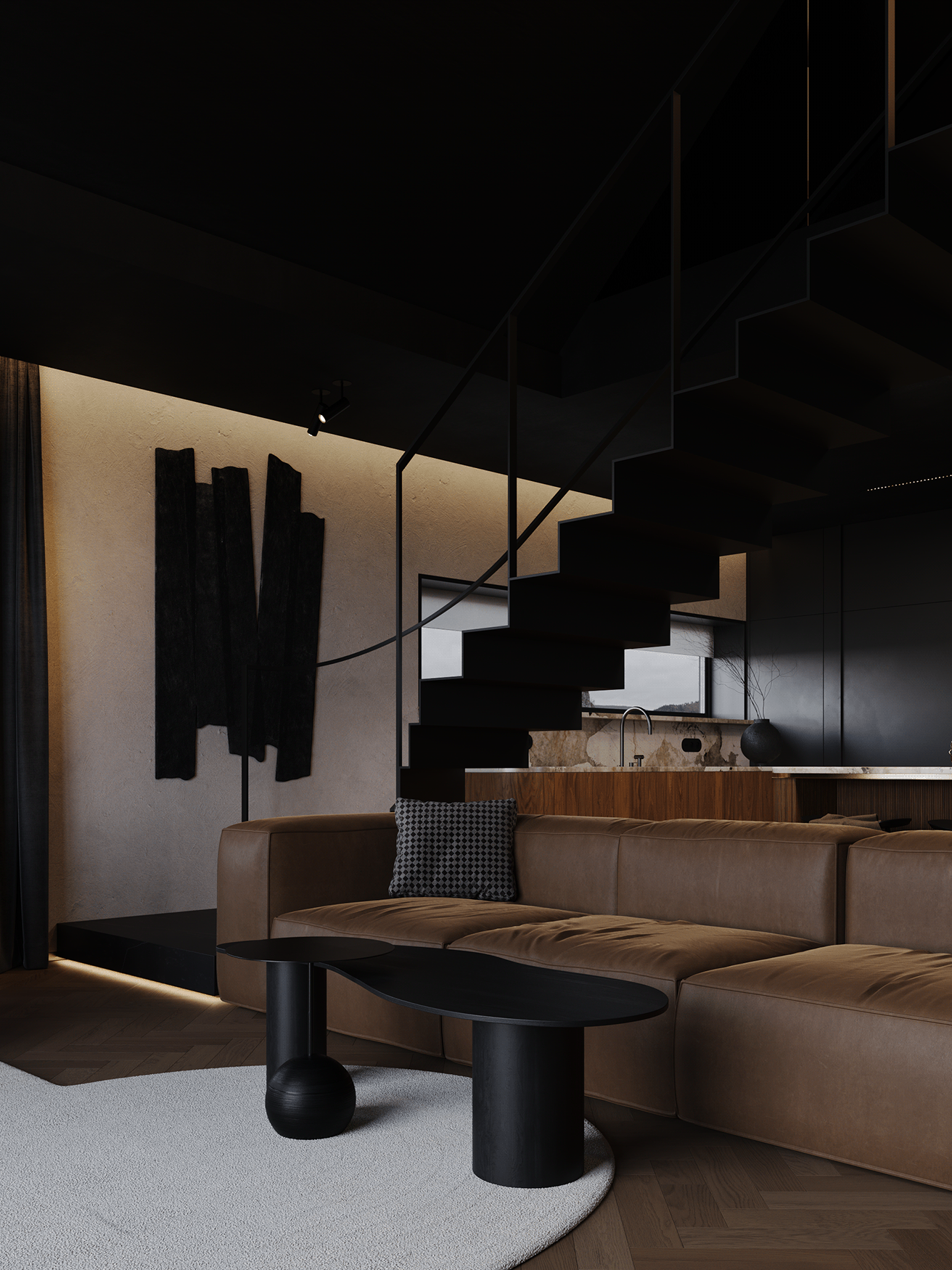
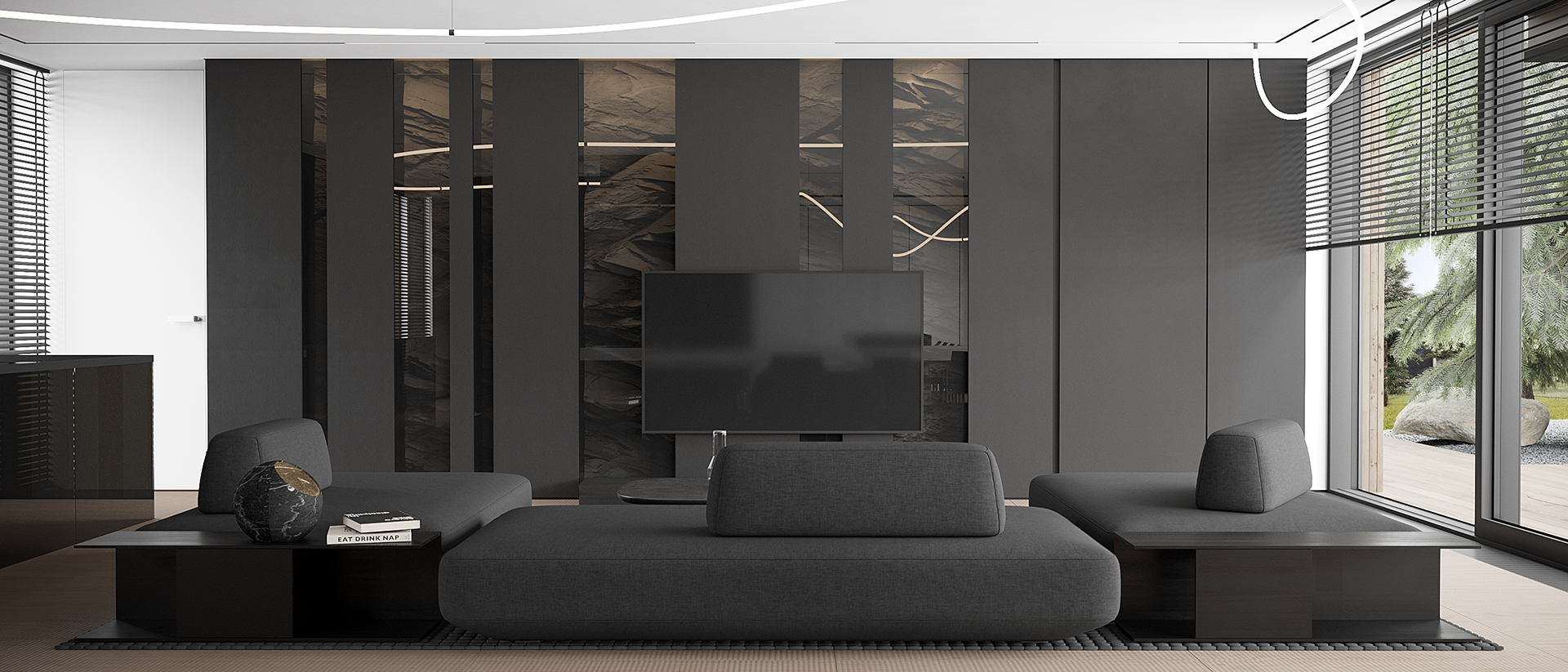
The living space is conceived as a dynamic yet balanced environment, structured by a continuous lighting line that flows through the interior and visually connects its key zones. This sculptural gesture introduces movement above a calm, grounded composition, shaping the atmosphere of the space.
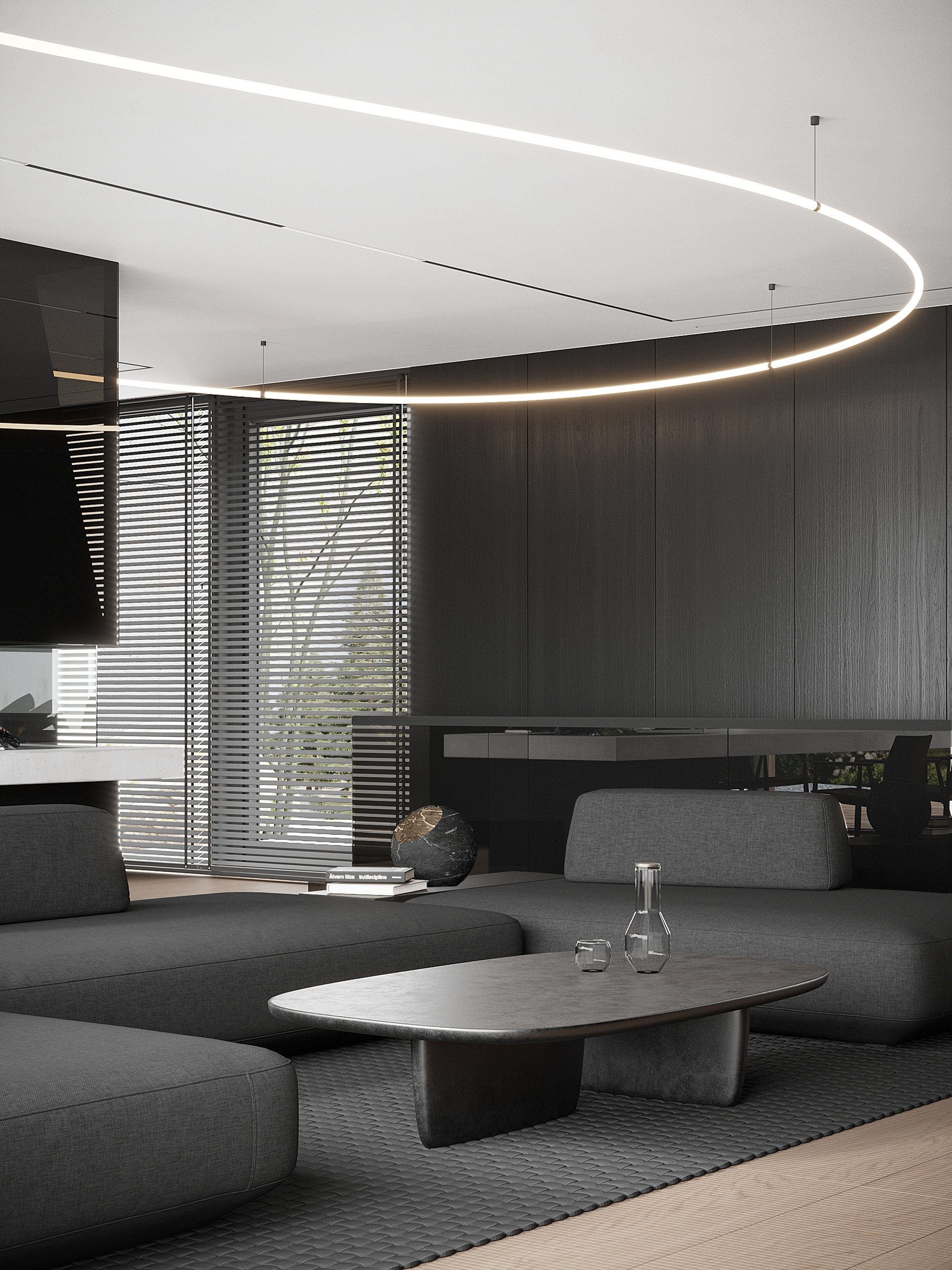
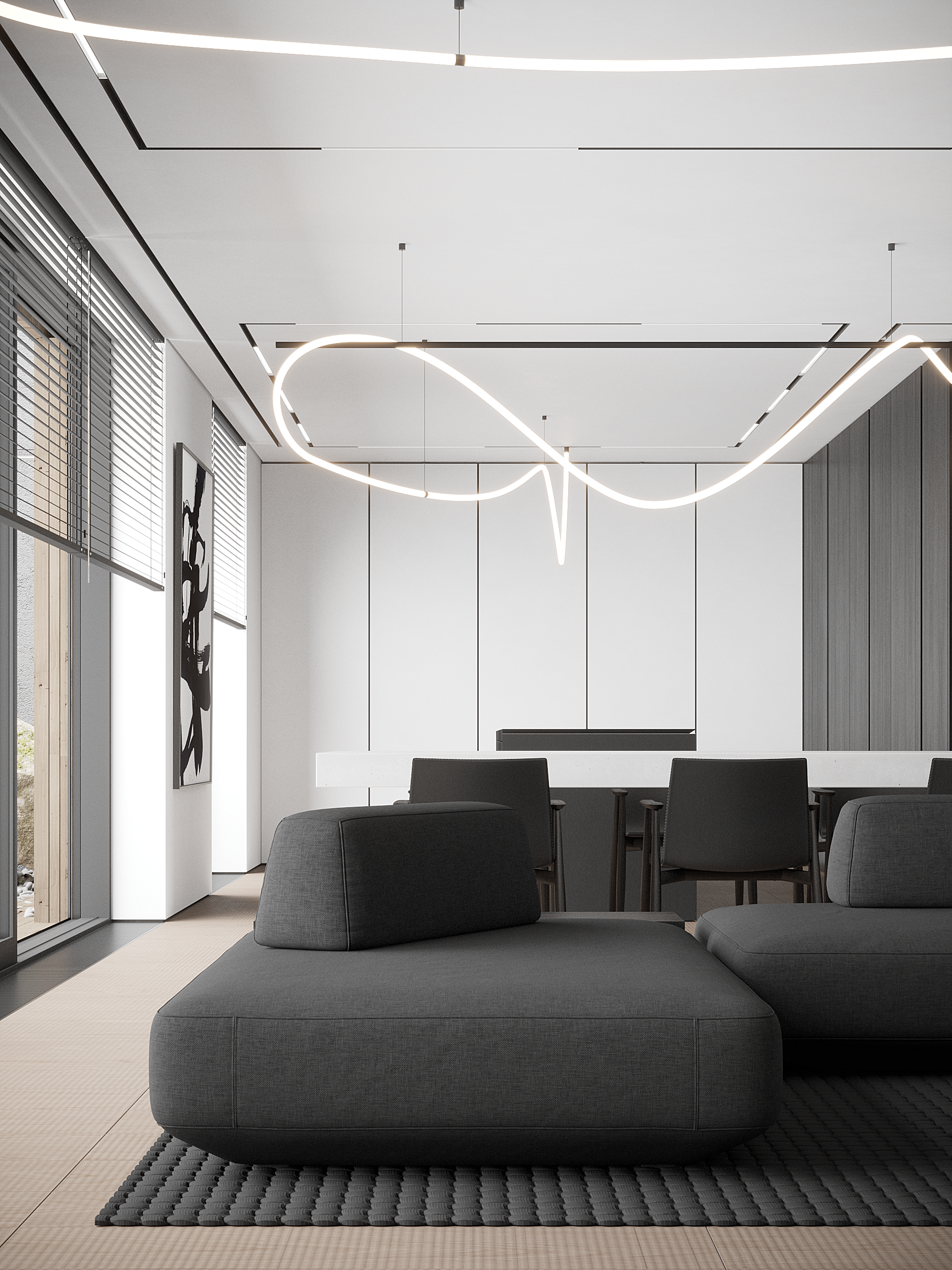
A dark, stone-like wall defines the backdrop of the living area, adding depth and a sense of mass while reinforcing the dialogue between architecture and natural references. In contrast, the modular sofa composition forms a flexible and adaptable core. Movable backrests allow the space to shift between different scenarios — conversation, relaxation, viewing the landscape, or focusing inward toward the interior — without altering the architectural integrity of the room.
|
Dining Area
|
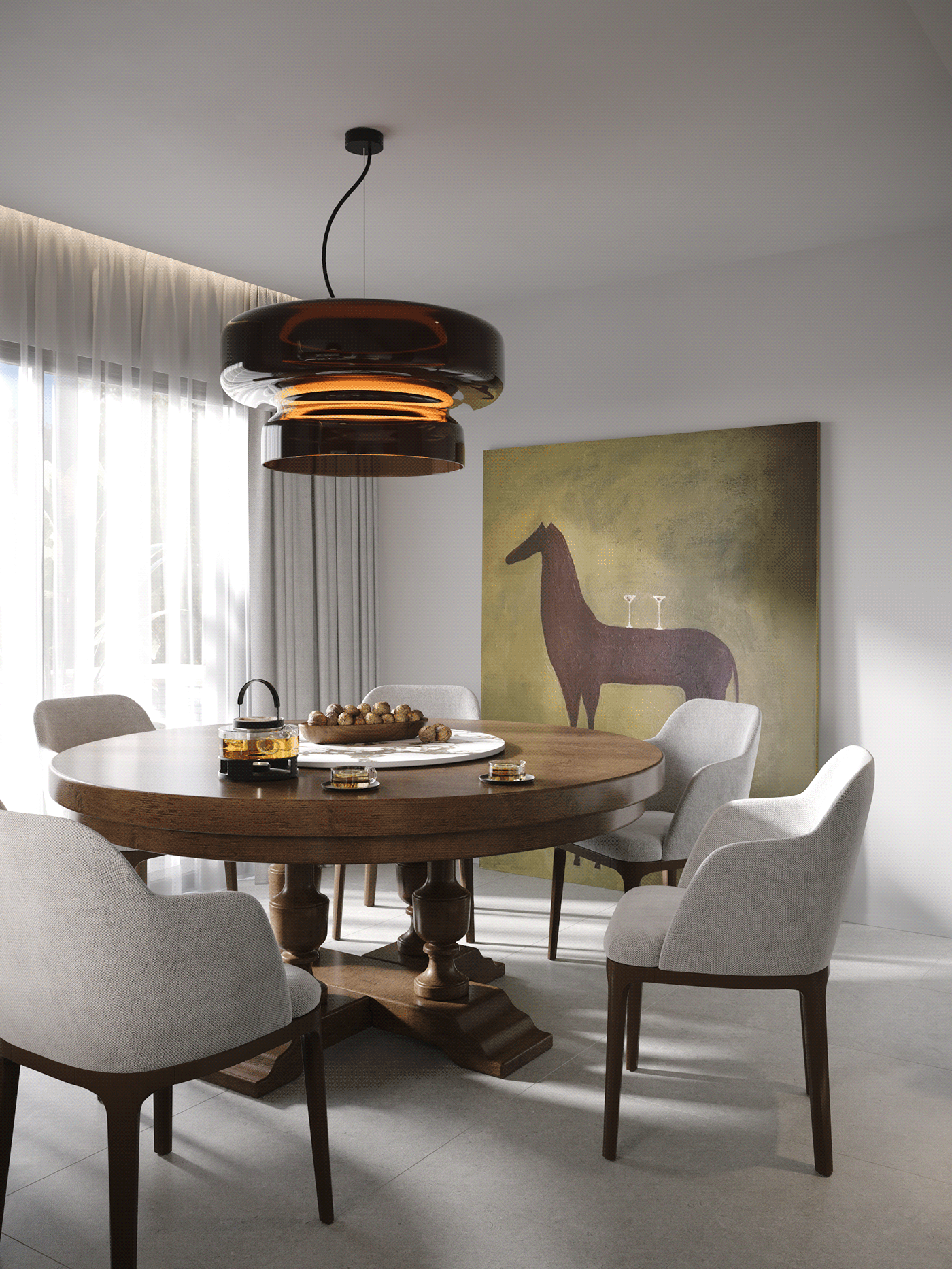
The dining area is centered around a cantilevered concrete table that appears to levitate within the space, emphasizing mass and balance. Fire is integrated directly into its surface, merging architecture and function into a single, expressive element.

|
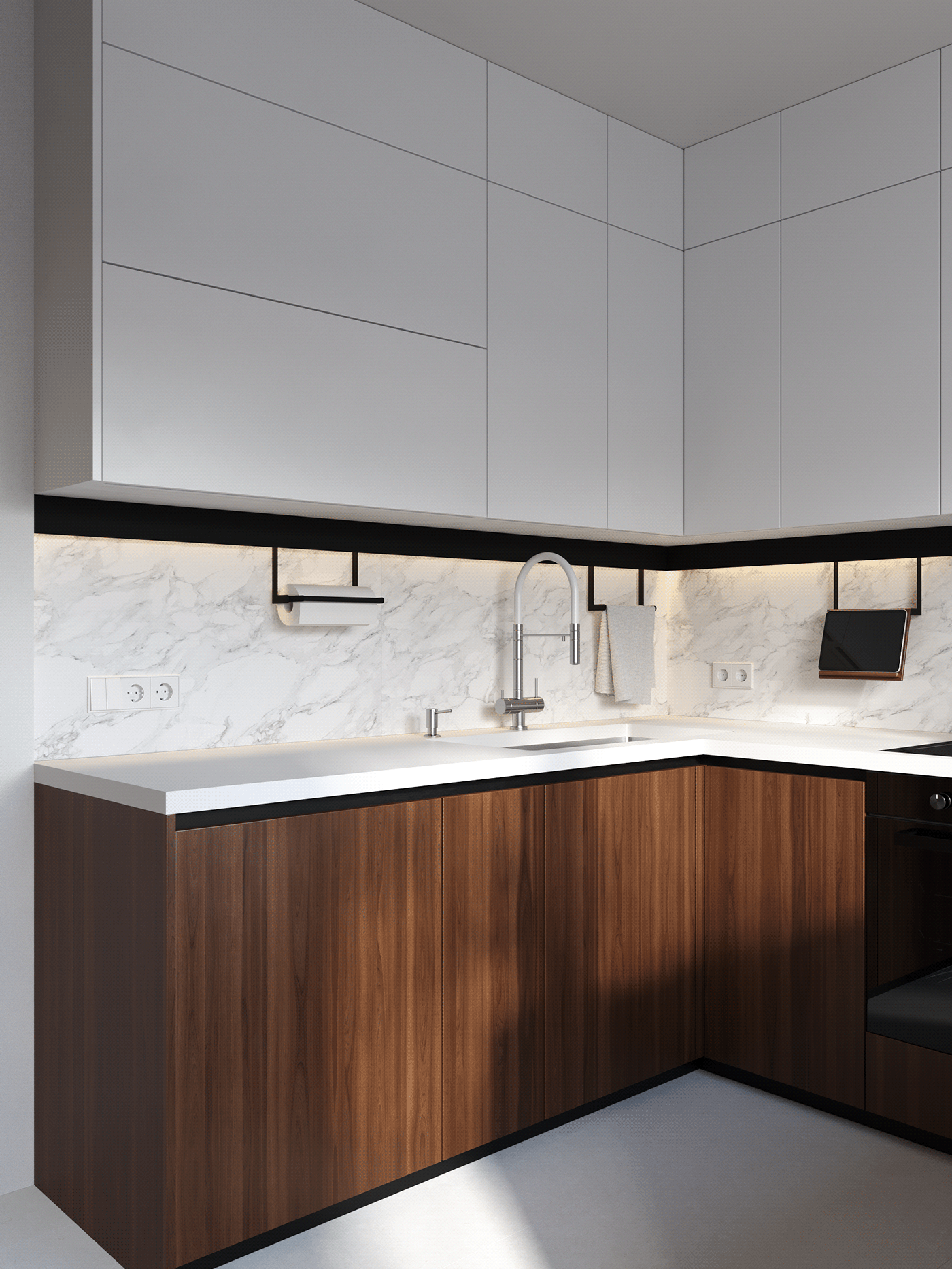
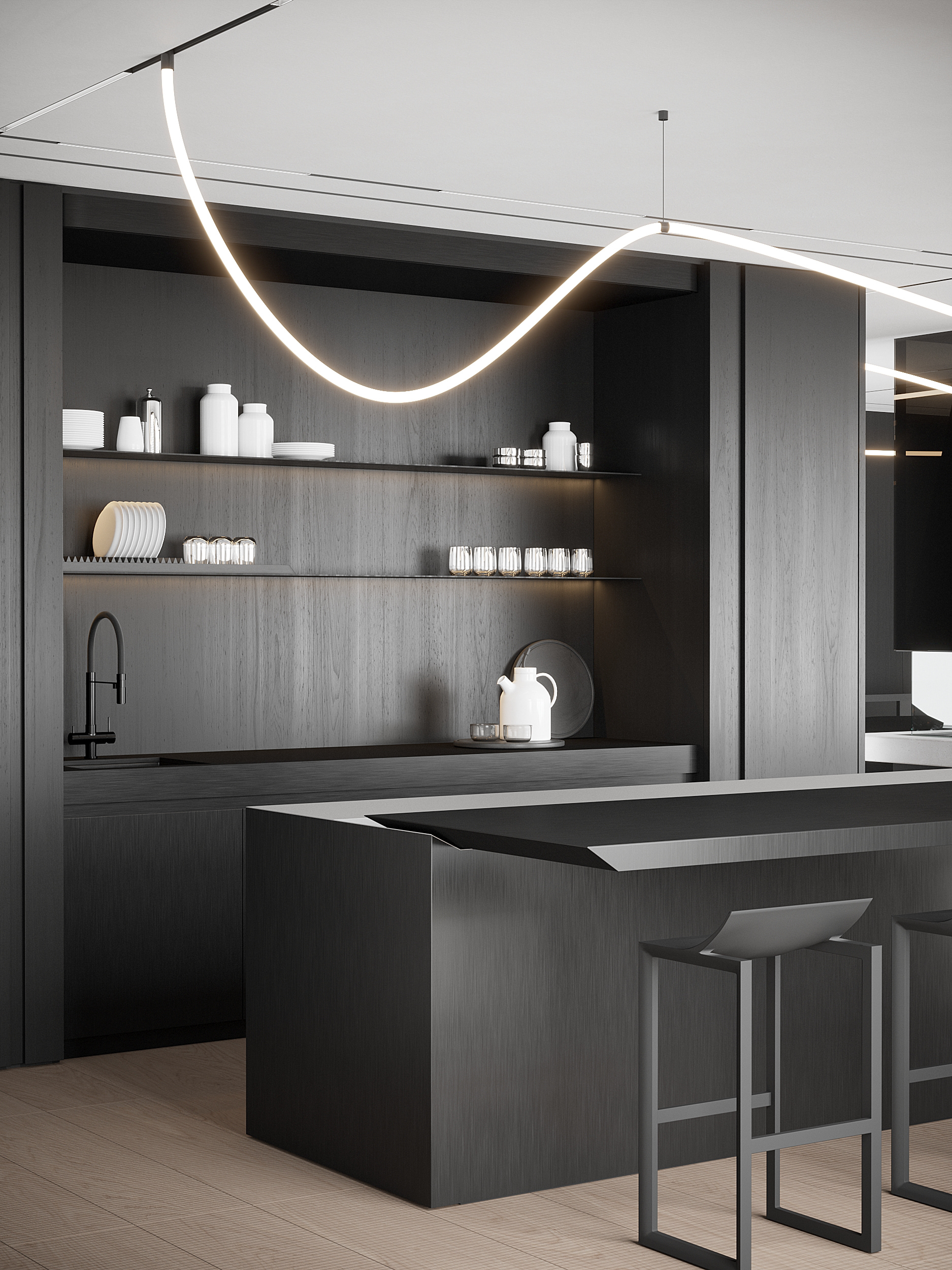
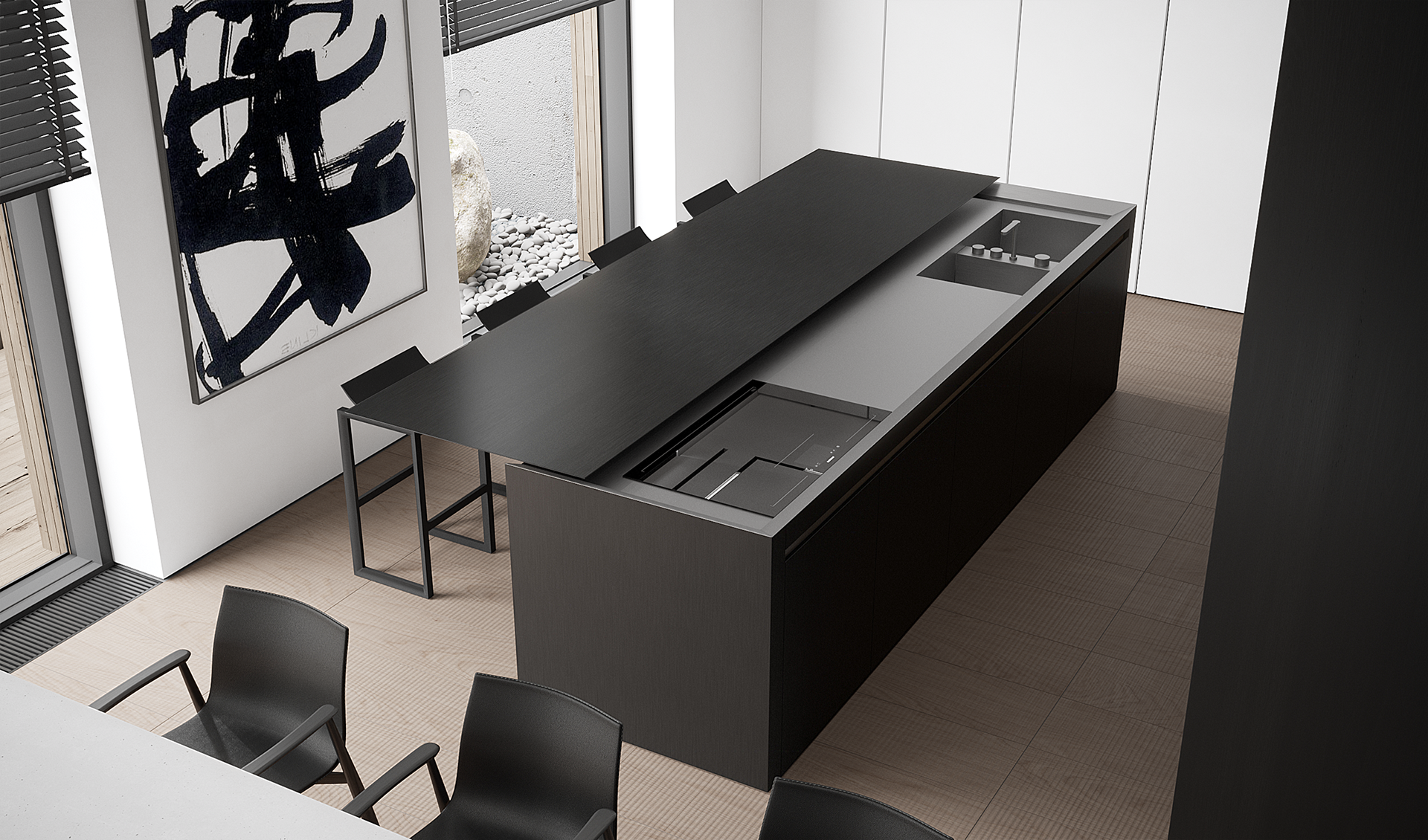
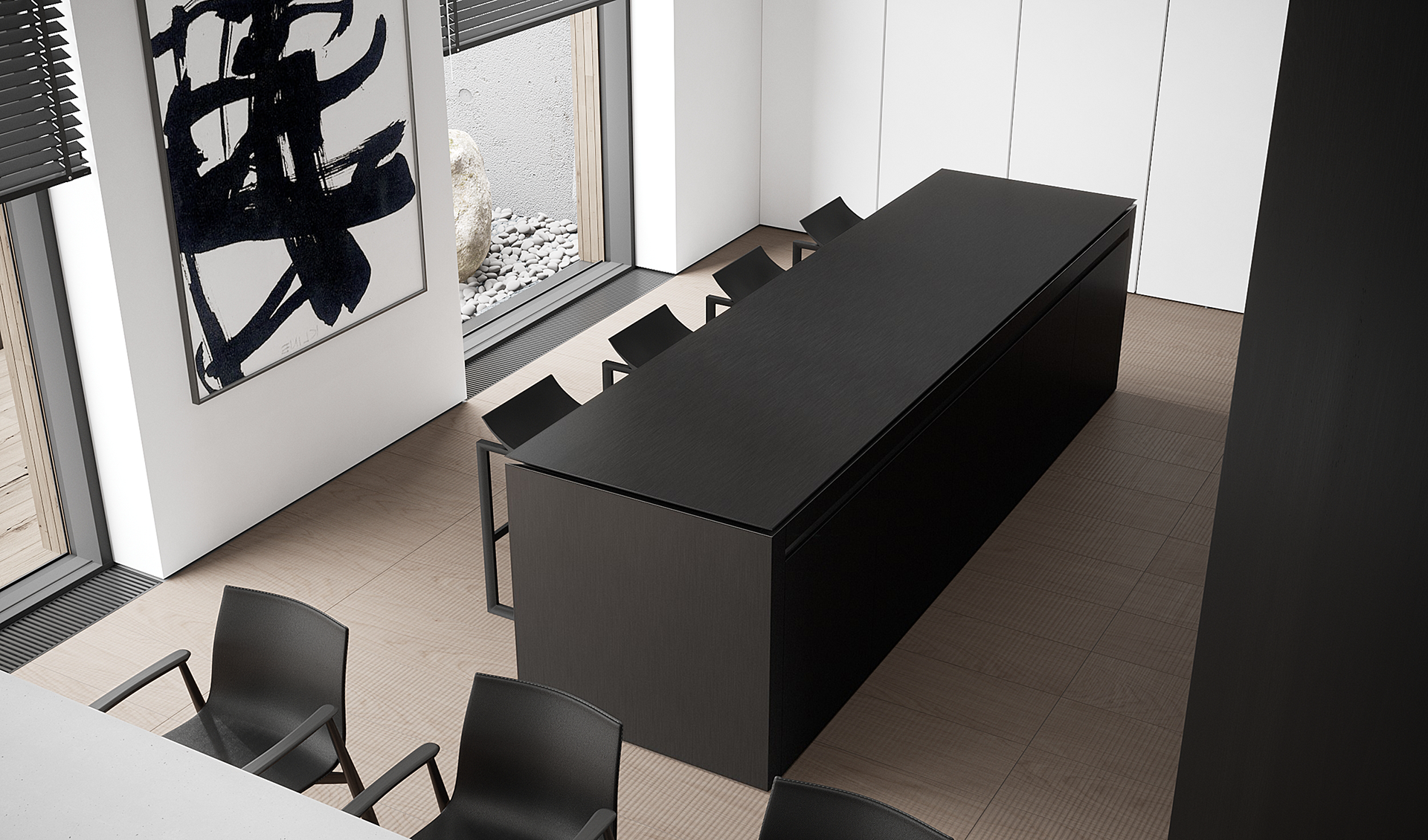
The kitchen is conceived as a concealed, almost invisible space, where function is hidden behind a calm, black monolithic form. A central island with a sliding mechanism transforms the volume, revealing the working surface only when needed, while the rest of the kitchen remains visually silent.
Hidden facades and integrated elements allow the space to read as pure architecture rather than a traditional kitchen, reinforcing the project’s concept of restraint, control, and spatial clarity.
Master Block
|
|
|
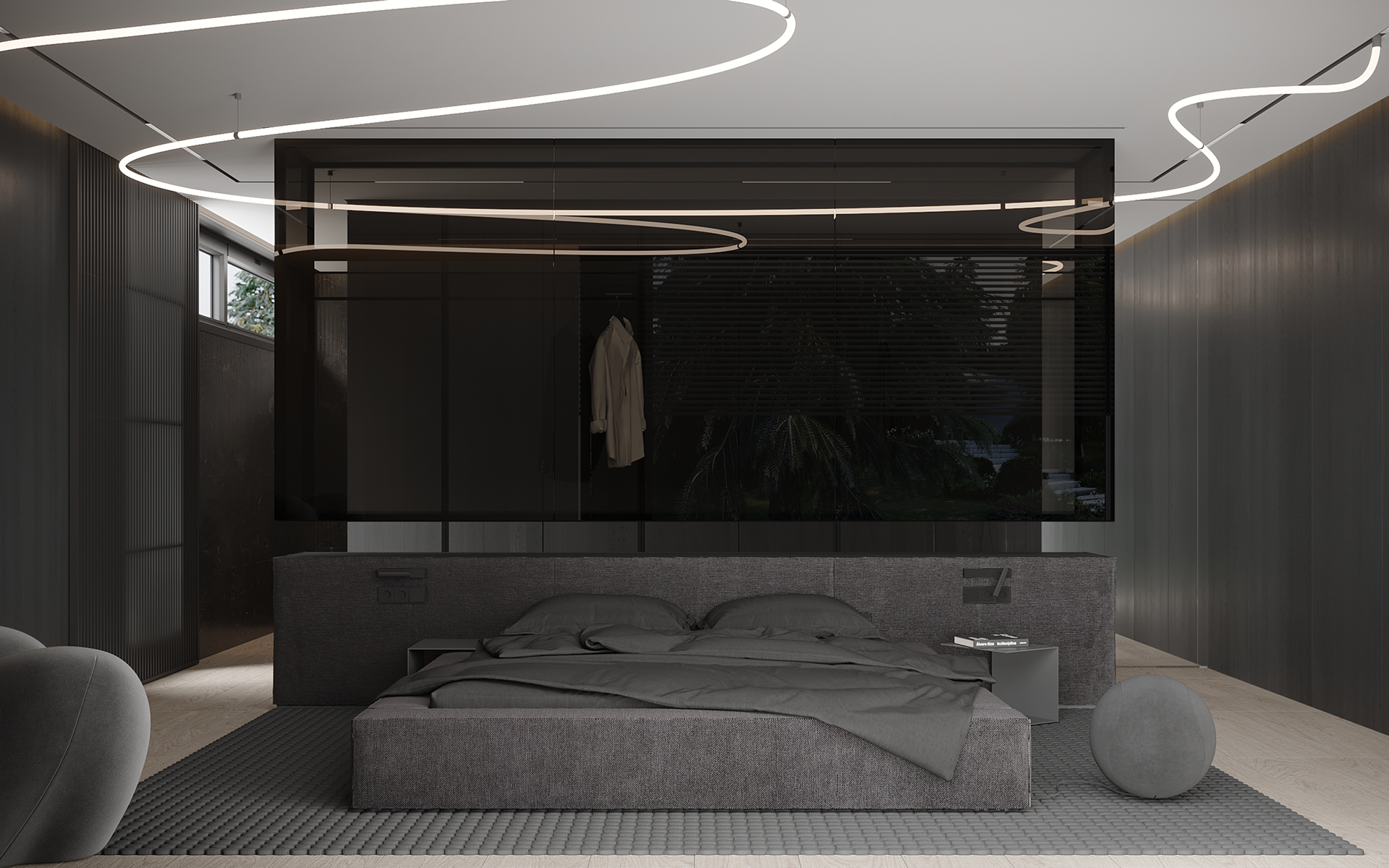
The master block is conceived as a calm, introspective volume, separated from the public zones both spatially and atmospherically. Dark surfaces, controlled light, and reduced geometry create a sense of enclosure and privacy, shifting the focus inward.
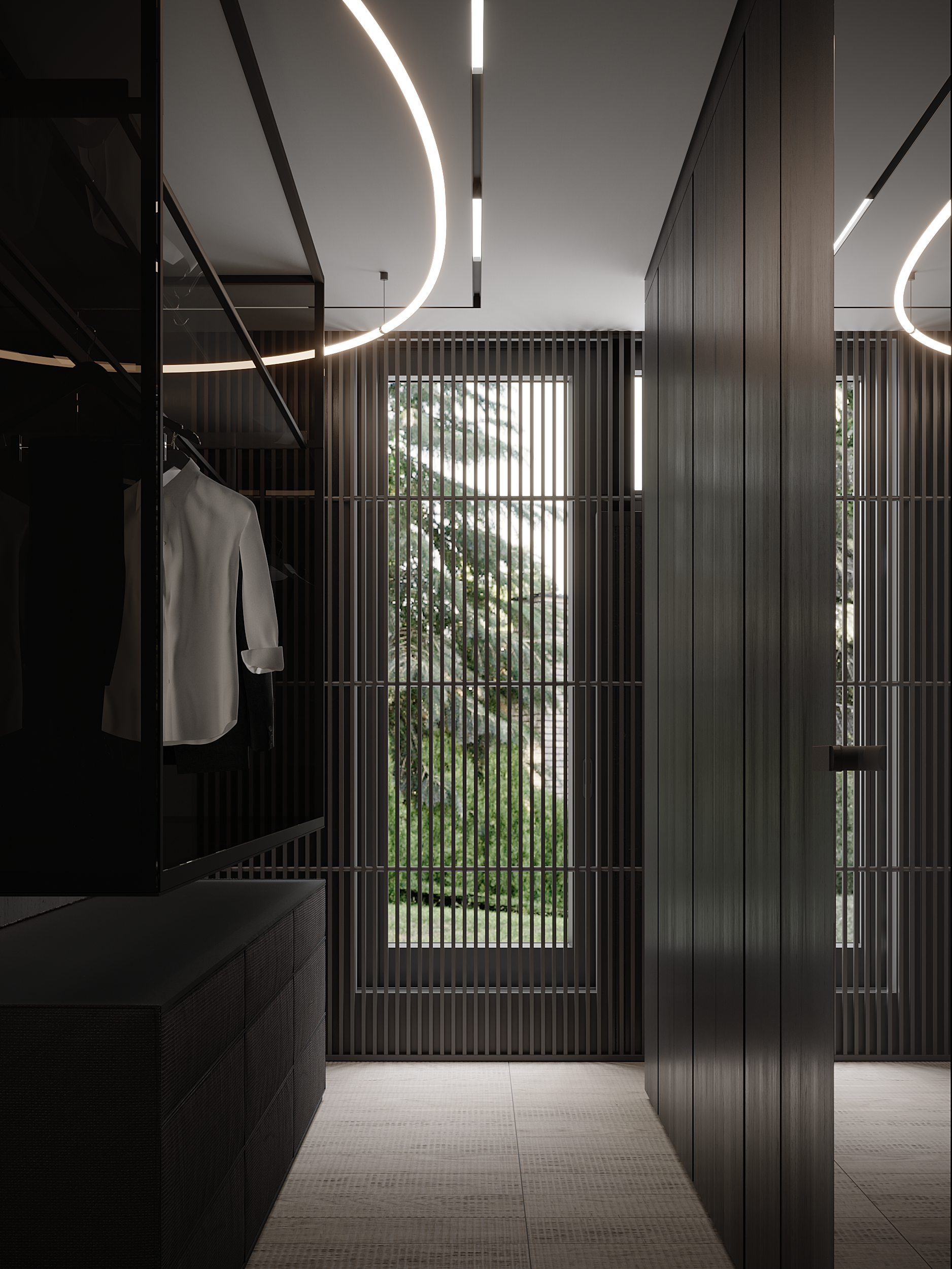
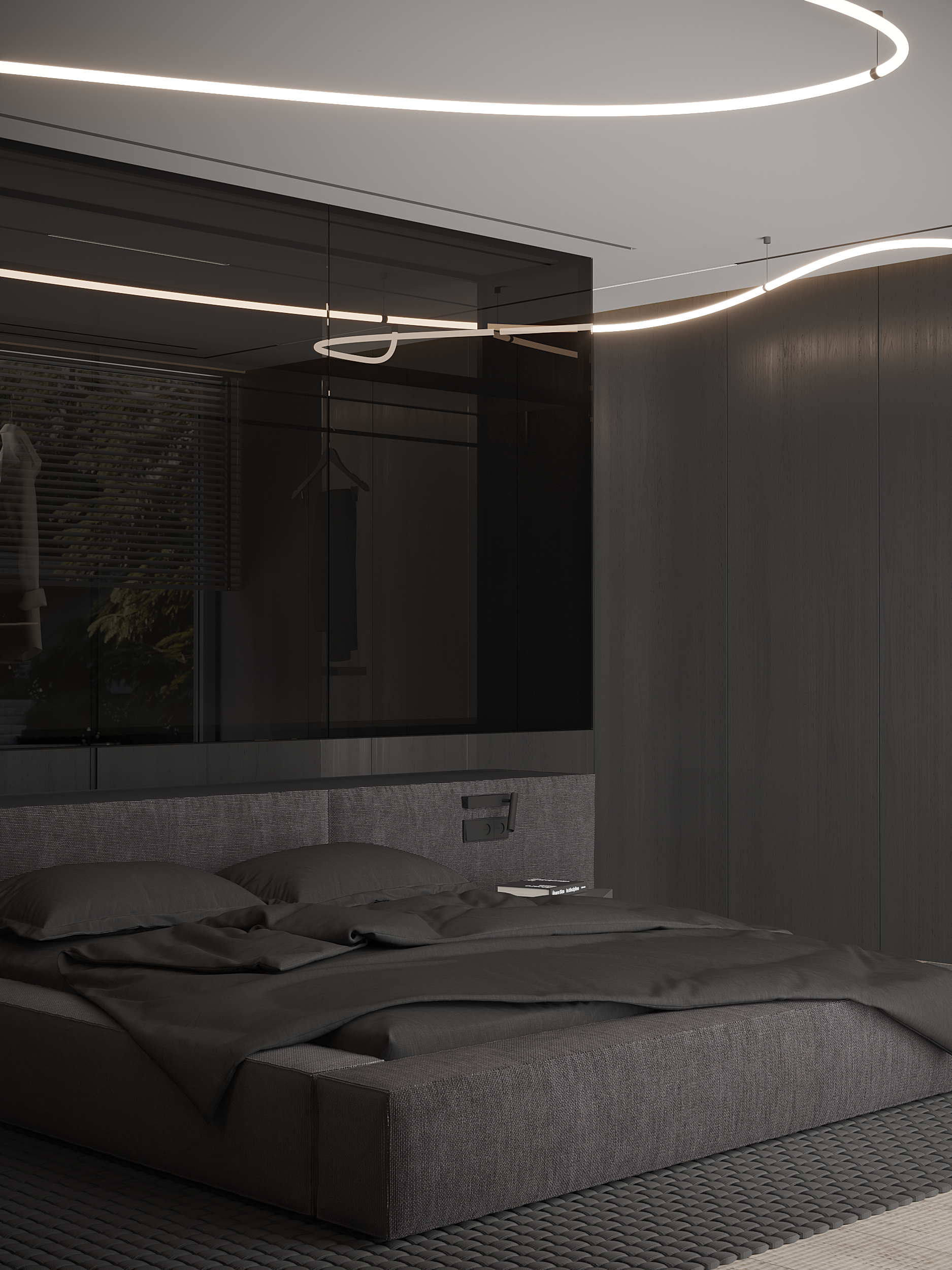
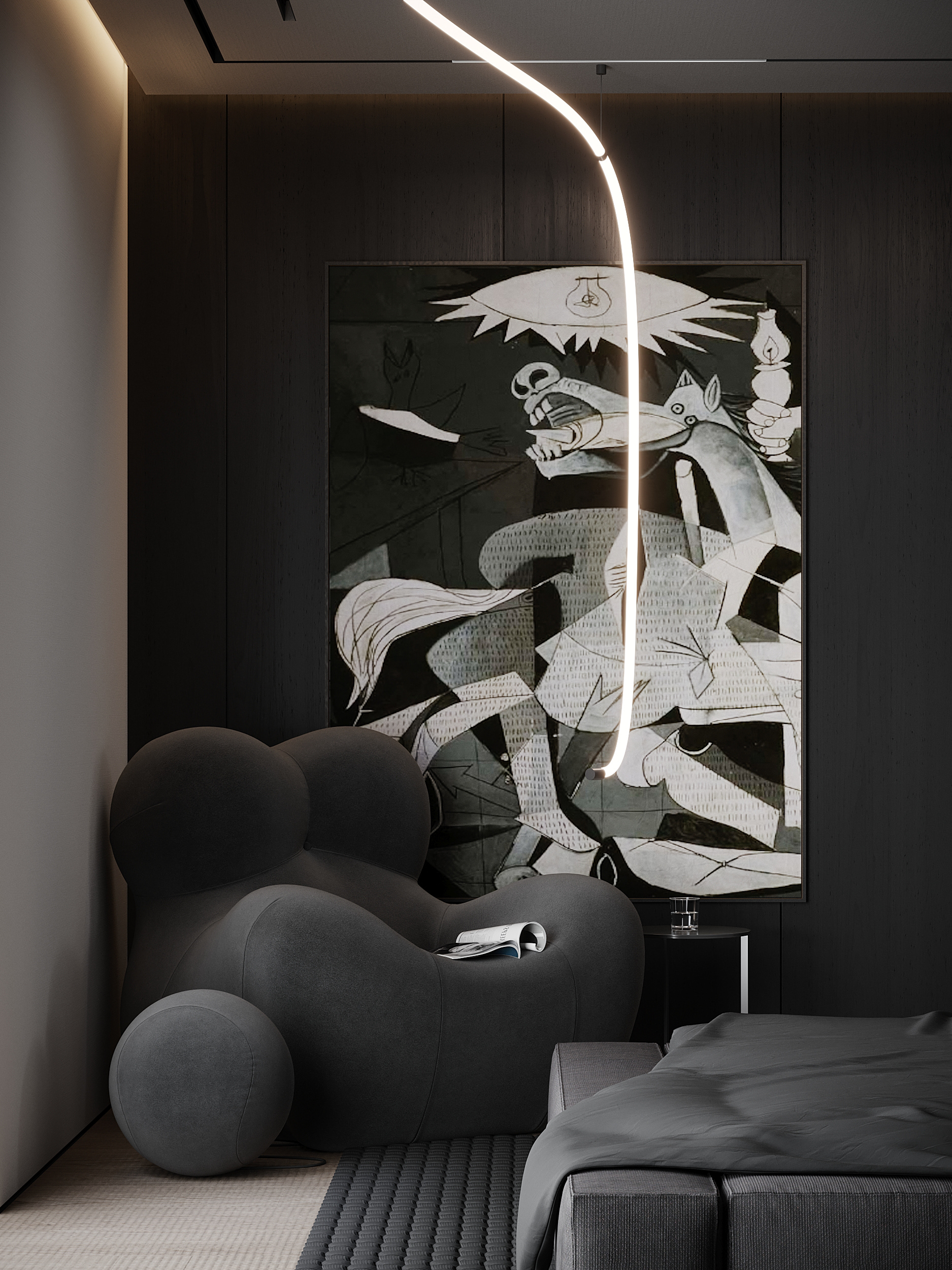
Key elements appear as floating or integrated masses, reinforcing the idea of visual lightness within a dense architectural shell. The space is designed not as a conventional bedroom, but as a unified, immersive environment where architecture, function, and atmosphere merge into a single experience.
|
Bathroom
|
|
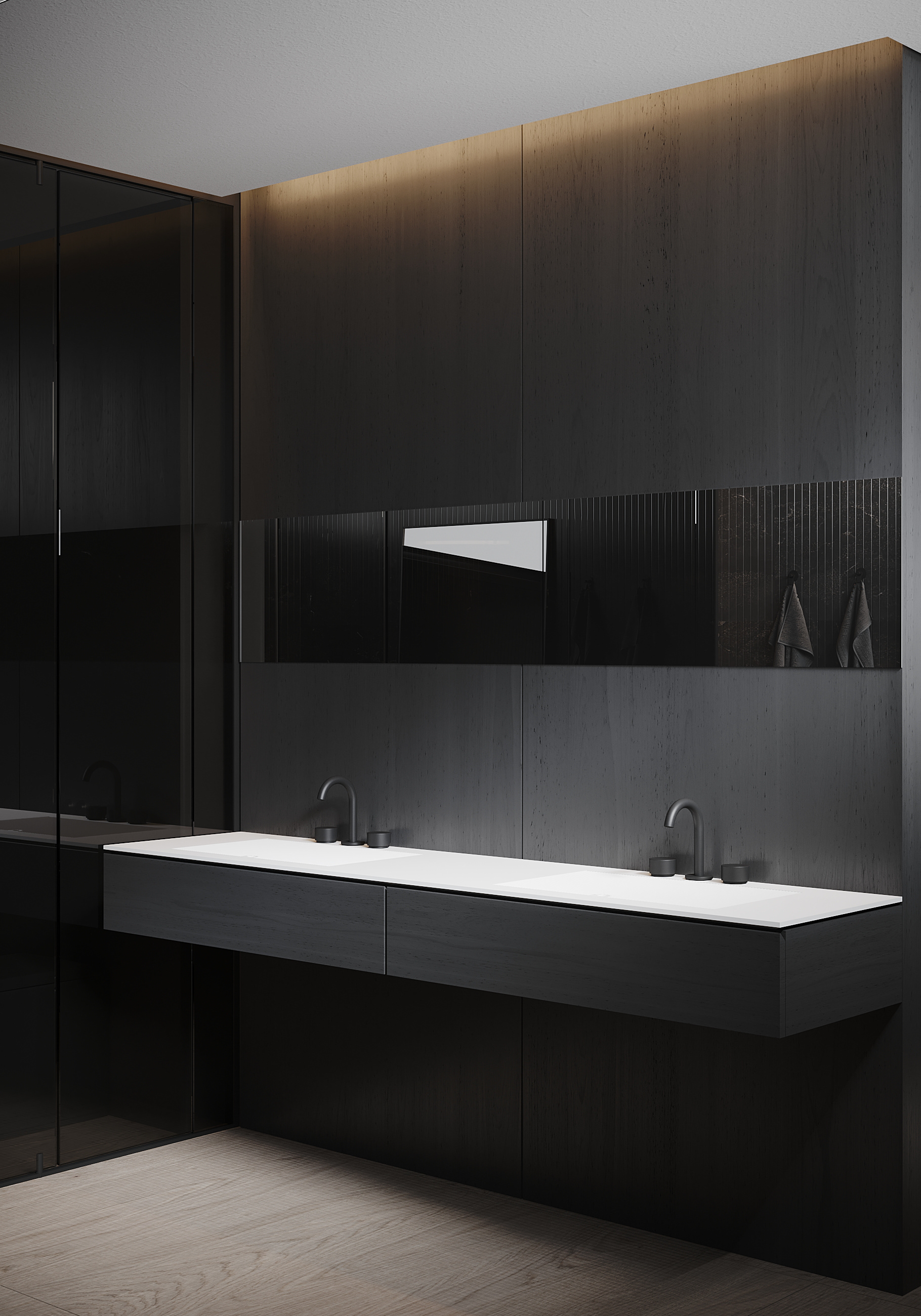
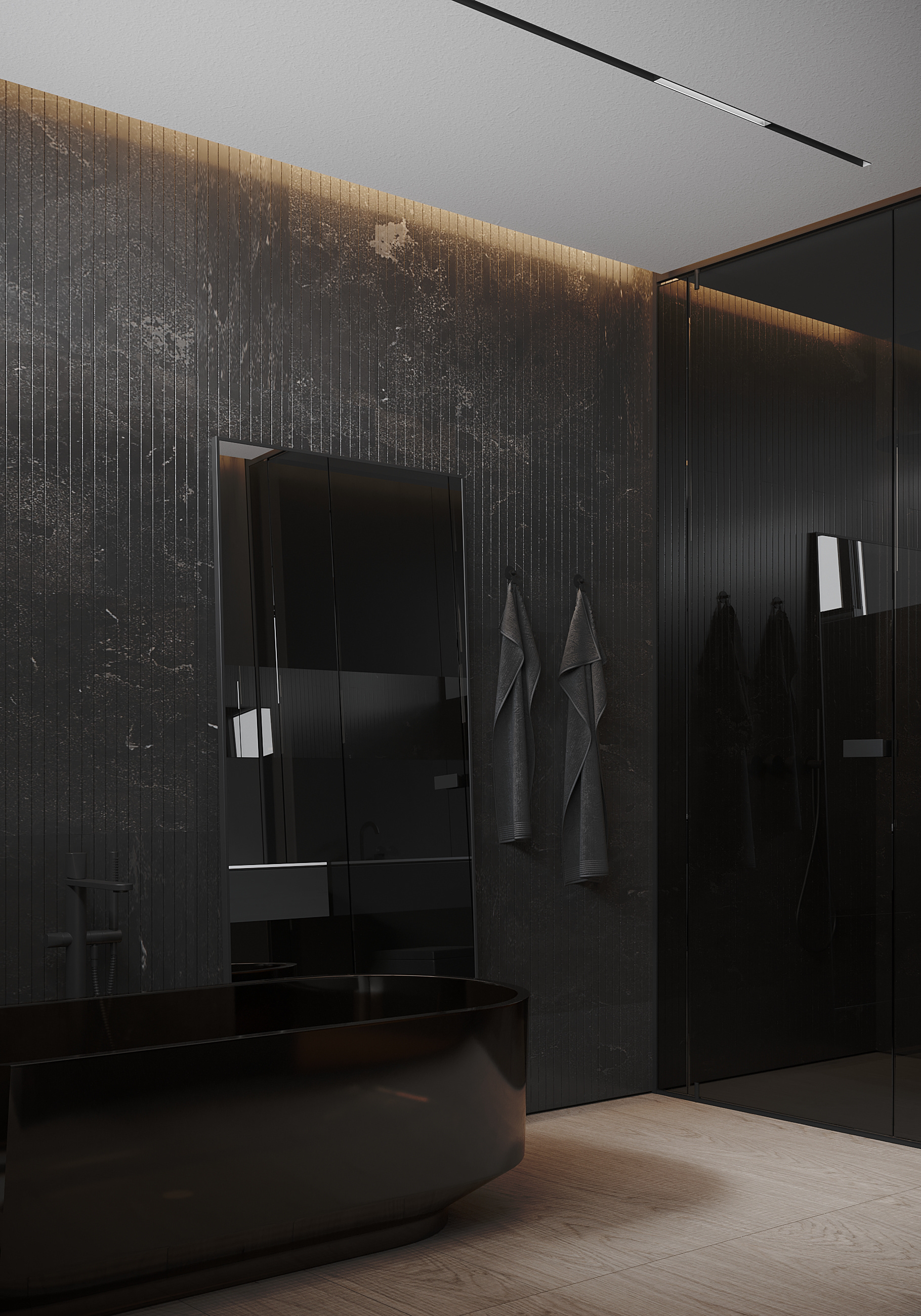
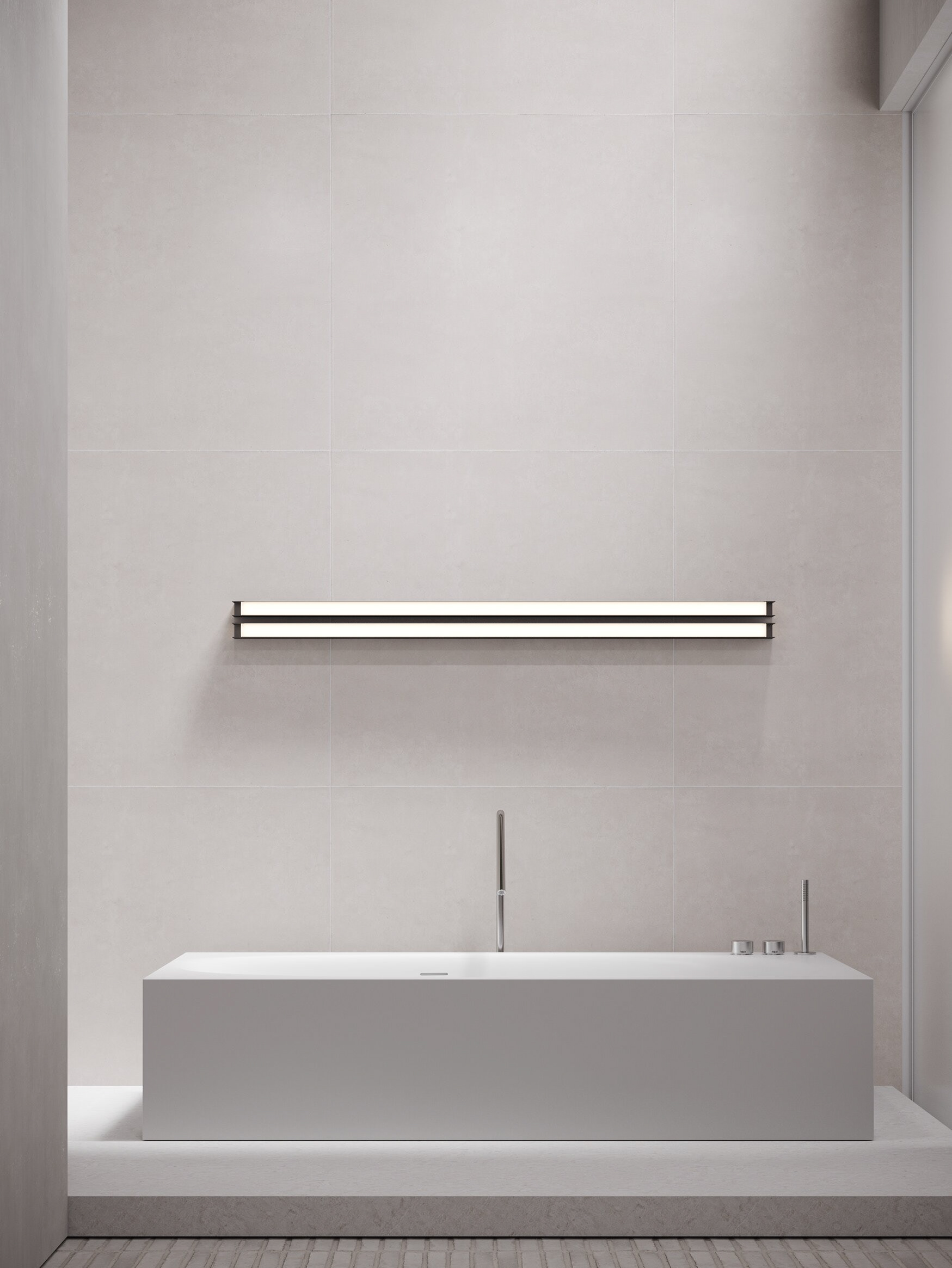
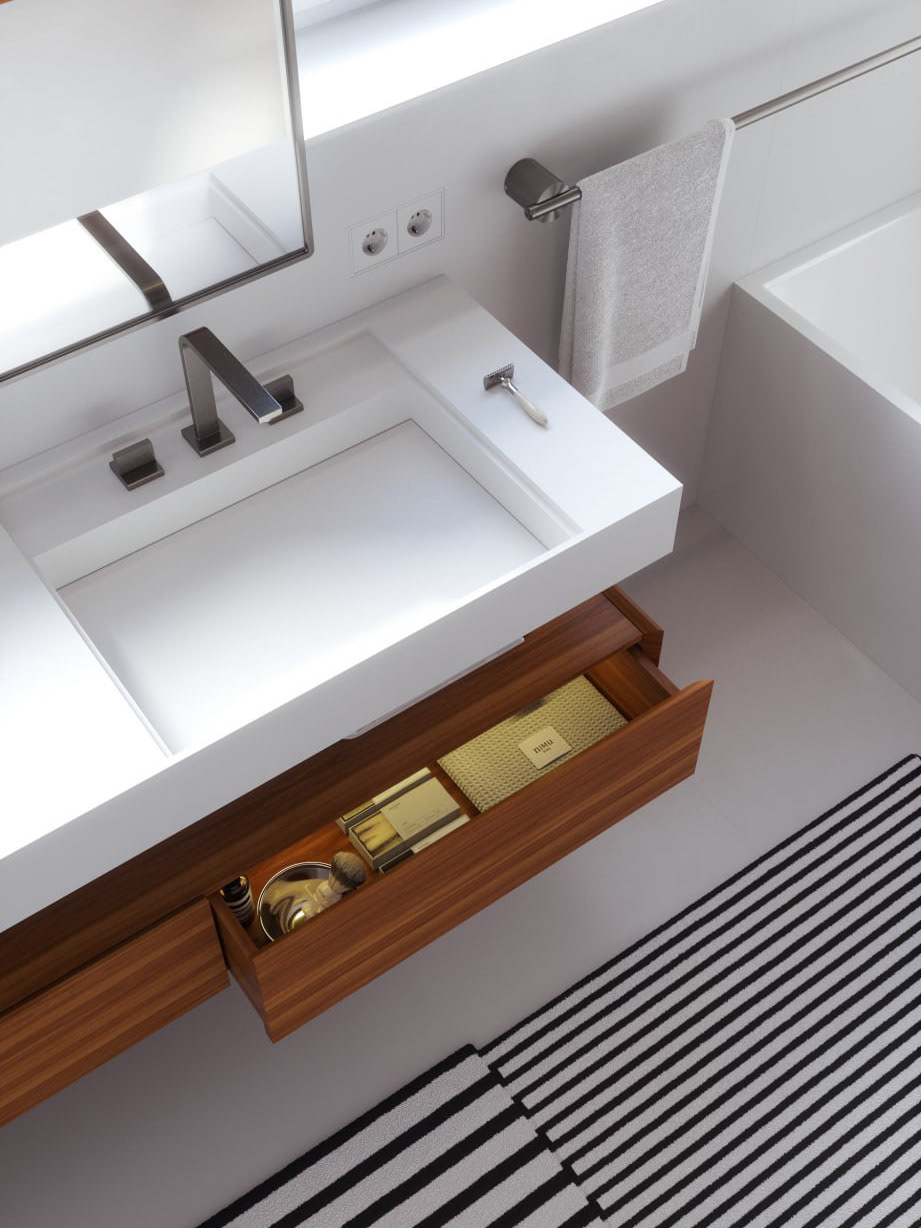
The bathroom is conceived as an immersive, monochromatic environment defined by depth, reflection, and controlled light. Dark surfaces dissolve spatial boundaries, allowing the room to read as a continuous volume rather than a collection of elements.
Materiality and proportion take precedence over decoration, creating a calm yet intense atmosphere. The space functions as a private, almost meditative counterpart to the expressive public zones, completing the project’s narrative of contrast and balance.